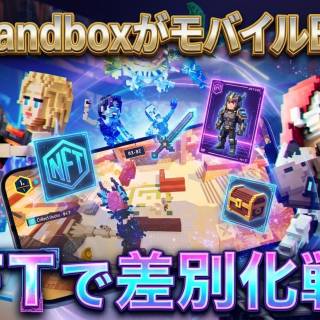
The Sandbox mobile BR starts, differentiating with NFT compatibility.
- 2026.03.31
- News
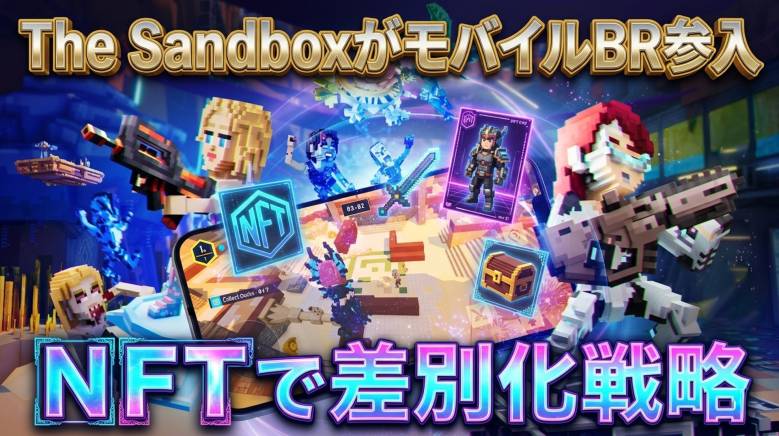
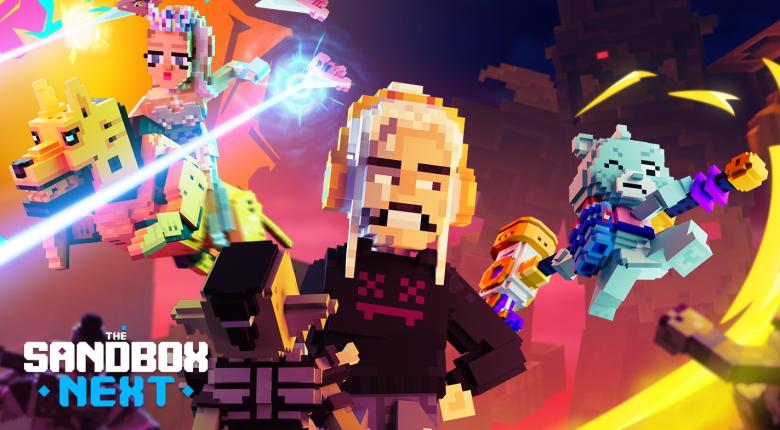
The Sandbox has announced a mobile battle royale game called "NEXT." We will analyze the reasons for the Web3 metaverse game entering the BR genre and the aim of differentiation through the incorporation of NFT assets.
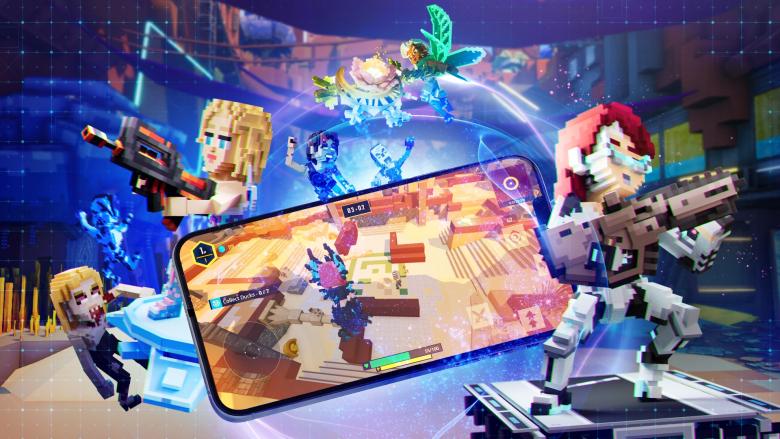
Animoca Brands' The Sandbox has announced the launch of its mobile-oriented battle royale game 'NEXT', which will begin on March 26, 2026. The game, developed using Unreal Engine, represents a significant evolution in gameplay mechanics. It combines competitive PvP battles with NFT asset ownership, creating a new generation Web3 game.
Mobile BR "NEXT" Announcement Summary
|
|
Source : www.sandbox.game |
Unreal Engine Recruitment and Mobile Development
The Sandbox is a new creation "NEXT", which has adopted Unity up to this point and switched to Unreal Engine. It aims to enhance the quality of graphics and the aspect of action, and to implement combat with a mobile-friendly approach.
The playtest will start on March 26, 2026, and features will be added gradually. Participation is by pre-registration, and the beta is currently being prepared. If you feel interested, it's better to act early.
The game mode is a battle royale format where up to 20 players can join. Different maps with unique characteristics are utilized, and there are also fun ways to change the combat.
Game design that incorporates NFT creation
The core of NEXT is to incorporate the assets and NFT creations held in The Sandbox ecosystem into its own game. The individual characteristics of characters and the progression of various games are also linked together.
In the playlist, by introducing quests, NFT rewards can be obtained, and there are also elements that require input from limited avatars and other features.
Why is the Metaverse heading towards BR?
|
|
Source : www.sandbox.game |
"Unsolvable Issues" and Game Design Reconfiguration
The Web3 gaming market has been significantly changing since the era of Play-to-Earn. The designs that were focused on tokenomics have become increasingly irrelevant, and the fundamental issue of 'not being a game' has been highlighted.
Meanwhile, Battle Royale is on the rise. With quick decisions to be made, no matter how many times you want to play, the question of whether you can win is always present—this three-player team that has gathered is holding the power to keep the players engaged, even if the tokenomics are not favorable.
NEXT is focusing on distributing high-speed PvP experiences, which is a response to the 'heavy' metaverse games that have emerged. Rather than just walking around with a mobile game, they are creating places where you can engage in immediate combat, aiming to lower the barriers to entry all at once.
Universal Design for Mobile Accessibility
The Sandbox continues to evolve in response to the blockchain, actively extending its hands towards the metaverse. "It's an extreme thought that we are heading towards a place where users exist."
On the PC front, there were many barriers to entry. The smart contract response is closely related to the pre-existing playstyle in Web2 games, and there are attempts to naturally incorporate Web3 elements into that.
Moreover, the battle royale is compatible with the metaverse. By successfully riding the wave of the current market, it aims to elevate the value of Web3.
Fortnite and PUBG's differentiation point
The advantages of NFT asset ownership are emerging.
In the case of existing battle royale titles, skins and items do not exist within that game. The moment you detach from the game, their value also disappears.
NEXT is different. NFTs and items held as NFTs can be used outside the game, and can also be carried into different games. The fact that the same avatar can function in multiple games creates a sense of 'my character is truly my own.' The continuity of ownership and the individuality of players are fundamentally established.
Moreover, with over 400 linked IPs, it is also important not to overlook the points where unique NFT collections can thrive within the game.
Ecosystem Dynamic Model Experiment
NEXT is not just a simple game, but is designed as an entry point to the entire The Sandbox. It allows players to incorporate NFTs and connect them to unique experiences or creative economies.
While games like Fortnite and PUBG create 'in-game economies', NEXT aims to create a 'complex ecosystem with multiple titles'. It is about playing and nurturing assets without being separated, existing within the flow of the game. This is leading to an increase in the value of the user experience.
Web3バトロワが直面する課題
Game characteristics and economic balance
When you try to organize NFT or tokens, no matter how you do it, the game's whiteness tends to become a backfire. In the case of Battle Royale, the front of the mouth is the result that comes out of that, and the attitude of the operation and the quality of the balance become significantly important.
The first related question is, "What kind of game can you play with a character?" That point is evaluated from all sides.
Battle with the already existing giant titans
The Batlrowail City is extremely competitive in terms of food. Players are naturally required to have high-quality free titles, and new participants are often told, "If you can't do this, you won't be able to succeed."
The differentiation of NEXT is linked to NFT connections and ecosystem integration, but in relation to general users who are not interested in Web3, the value of that is somewhat directly related to the actual win-loss ratio.
matome
The Sandbox's mobile BR participation is a movement that indicates a transition to a 'game that can actually be played' from the metaverse. The holding of NFT assets tends to lead to a long-term divergence, but the success rate should be based on the completion level of the game.
For Web3 games to be widely adopted in the marketplace, it is questioned whether they can compete with existing titles through agile economic design and prior player experience. Such a perspective can be said to have been well received.
https://www.blockchaingamer.biz/news/41919/the-sandbox-mobile-battle-royale-game-next-playtest-26th-march/
https://egamers.io/the-sandbox-new-playtest-is-live/ https://www.animocabrands.com/announcement/the-sandbox-opens-pre-registration-for-next-mobile-playtest-built-on-unreal-engine
The Sandbox NEXT: https://www.sandbox.game/next/
The Sandbox Blog: https://www.sandbox.game/en/blog/the-sandbox-next-playtest-is-live/3523/