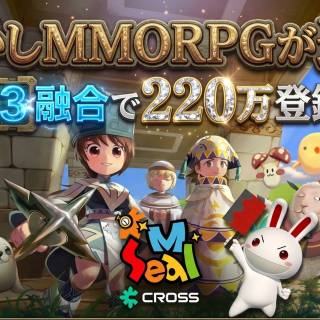
The classic MMORPG "Seal M" will launch globally with CROSS chain support—official service starts on March 19 after 2.2 million pre-registrations.
- 2026.03.23
- News
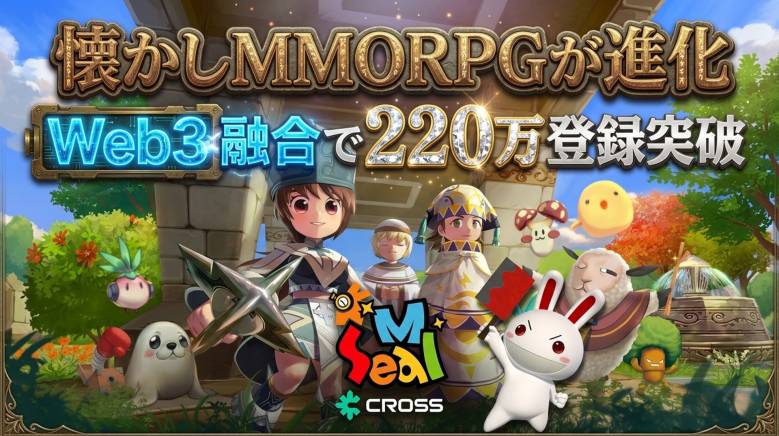
Seal M on CROSS has finally started its global expansion. What was behind the gathering of 2.2 million pre-registrations? We will delve into how it differs from traditional P2E and interpret the new trend where nostalgic MMORPGs intersect with Web3.
PLAYWITH KOREA Inc. and NEXUS CO., Ltd. have started the global service of the MMORPG "Seal M on CROSS." This is a ship release in a form that fundamentally incorporates reporting functions based on blockchain technology.
このスリリングなMMORPGがWeb3で復活しています。
Seal M on CROSSがライブになりました! ?
— Seal M on CROSS (@SealMonCROSS) 2026年3月19日
冒険者の皆さん、Shiltzでの旅が今始まります。
今すぐ参加してプレイを始めましょう!
? ダウンロード: https://t.co/XQcGVbPSO6#SealM #CROSS #SealMonCROSS pic.twitter.com/adu0DT72U7
PLAYWITH KOREA Inc. and NEXUS CO., Ltd. have collaborated to release "Seal M on CROSS" on April 19, 2026. The game is based on the world view and gameplay of the PC MMORPG "Seal Online," which was a trendsetter in the early 2000s. It is described as a "standardized version" of the game.
The game features beloved characters, exciting combat systems, and a variety of elements that promise to engage players. The game is designed to be accessible to both mobile and PC users, ensuring a wide range of players can enjoy it.
As for the Web3 game, it has been noted that there are no new IPs that have gained significant attention. However, the game has been launched as a "known game," and it is expected to have a considerable impact on the initial user acquisition.
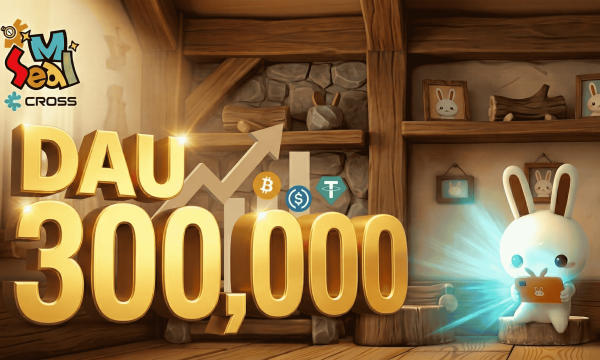
Before registering 220,000 cases is spoken.
Before the global launch of the game, it was reported that about 220 million units were sold. The backlash was particularly significant in Southeast Asia. Along with the potential of the game, the MMORPG culture has deeply rooted in the region, gathering a passionate community.
The reason why this number has gathered is twofold. In the background, there are significant reasons.
Additionally, there is a heavy emphasis on a title called 'Seal Online'. It has been reported that players have been immersed in the game, and the world view is also deeply ingrained in the body. The psychological aspect of 'how one can remember it' is low, and there is a feeling of 'having come to play'.
Furthermore, it is a point that has been designed as 'almost a blockbuster'. The game is primarily focused on that, and the tokens are positioned as secondary products. In response to the upcoming Web3 game, there is a design that feels like 'somehow, money is being involved' in the layer of governance.
Before enjoying the game, there is a warning.
In 'Seal M on CROSS', by passing through the play, you can acquire the in-game currency 'Shiltz Crystals', which can be exchanged for the production 'SHILTZx'.
The reason for this is the controlled supply of the content roll. Shiltz Crystals are limited in their issuance, and 'the more you distribute, the more the value will drop' is a past web3 game that has been avoided due to the design phase of the initial setup.
Furthermore, this SHILTZx can also be used to incorporate the rare item 'Ooparts' into the game. The flow of re-investment in the game is naturally created by the generated resources, and the design that does not leave behind exchange tools is shining.
What is different about P2E and other things?
The Play-to-Earn game of Katte no is a game that gathers users by providing a token that can be earned by playing. However, many of them did not continue for long. The question is often how this happens.
- The token distribution causes the value to drop.
- The mechanics of the gameplay become 'boring'.
- The game itself does not become interesting.
"Seal M on CROSS" was developed based on three design principles that focus on this contradiction.
- Setting an upper limit on the number of actions
- Creating a structure that does not hinder the progress of the game and resource acquisition
- Maintaining the game's performance with existing IPs
Nevertheless, the core is that the design is not aimed at "gaining rewards." Players are primarily encouraged to enjoy the game, with resources being generated along the extended line. From "Play to Earn" to "Play and Earn"—while there is a difference in wording, the design concept is fundamentally different.
As a bridge between Web2 and Web3
「Seal M on CROSS」 is a good example of an attempt to bridge the user experience of Web2 games with the economic framework of Web3.
By maintaining a familiar game UX, and slightly reducing the production of on-chain assets, it aims to provide a practical pathway for more people to engage with Web3 games.
Regarding the adoption of shared servers and cross-platform support, it also aims to create an environment where traditional gamers and Web3 natives can play together in the same space, without losing sight of the fun.
This example shows the next step.
The pre-registration for 220,000 items is confirmed, and there is no need for the Web3 game to be anything new or unique.
Moreover, by making the existing game community and player culture into a platform, the last battle that takes advantage of the local value will likely lead to sustainable growth.
To directly avoid the failures of the P2E era, the MMORPG known as 'Seal M on CROSS,' which has a sense of community, shows where the next Web3 game should head, becoming a guiding presence.
Seal M on CROSS
“Seal M on CROSS” is a casual MMORPG based on the IP of the classic hit MMORPG “Seal Online.” Set in the fantasy world of “Shiltz,” the game follows an adventure that unravels the mystery of a lost hero amidst the conflict between Elim, the God of Light, and Varie, the God of Darkness.
Players can choose from a variety of classes, such as Knight, Mage, and Priest, and enjoy classic MMORPG elements including field exploration, monster hunting, cooperative field boss battles, lifestyle content like fishing and socializing, and item trading in the marketplace.
Furthermore, the game is designed to be accessible to casual players thanks to its adorable monsters, pets, and comical world setting. A key feature is its adoption of a “Play-to-Value” ecosystem, where gameplay experiences and progression achievements are linked to digital assets on the blockchain, offering a new gaming experience that naturally integrates “play, achievement, and asset value.”
■ Blockchain Integration (CROSS Ecosystem)
Designed so that playtime and achievements are linked to digital assets, suggesting the potential for value even outside the game.
■ Casual MMORPG Design
Features approachable 3D cartoon-style graphics that carry on the legacy of “Seal Online.”
■ Diverse Class System
Multiple classes exist, including Knight, Mage, Priest, and Jester, allowing for strategies tailored to your playstyle.
■ Pets & Garders (Mounts)
Enhance exploration and combat with trainable pets and Garders that boost movement speed.
■ Social Features
Emphasizes player interaction through features like the “Seal Talk” chat function and a couple system.
■ Combo Combat System
Each character has unique combo actions, adding dynamic action to combat.
◾️Basic Information
Game Title: Seal M on CROSS
Genre: Casual MMORPG
Compatibility: iOS / Android (Mobile-focused)
Price: Free-to-play (with in-app purchases)
Development Status: Scheduled for release (April 2026)
P2E: Yes (Play-to-Value model, suggests asset integration)
Blockchain: CROSS Ecosystem (Details undisclosed)
Tokens: Undisclosed (Suggests integration with in-game assets)
NFT: Digital representation of gameplay achievements (Details undisclosed)
Provider/Developer: PLAYWITH Inc
Whitepaper URL: Unconfirmed
https://www.sealm.com/
Translated with DeepL.com (free version)