Blockchain game sessions completely disappear at GDC 2026 — an industry barometer indicating the decline of NFTs and the rise of AI.
- 2026.03.13
- News
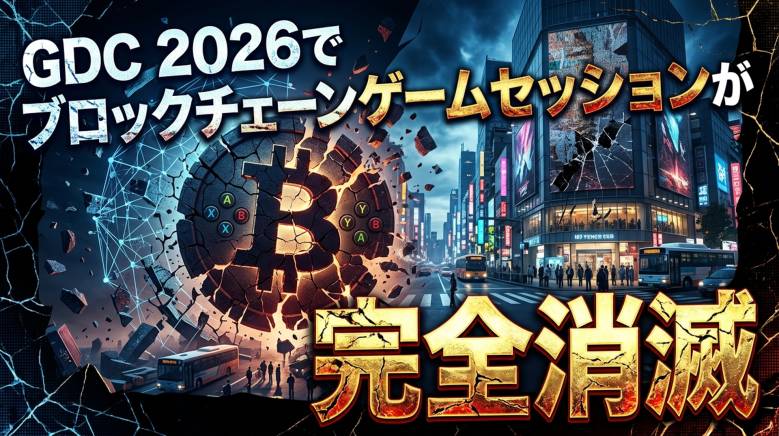
At GDC 2026, blockchain game-related sessions were zero for the first time. To fill that void, presentations related to generative AI are dominating the venue. We will analyze the market changes after the NFT boom, the developers' complex feelings towards AI, and the current state of the gaming industry as reflected by the conference.
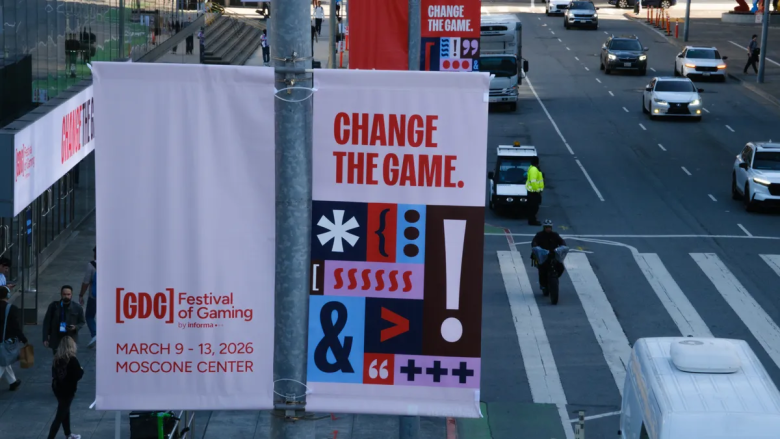
At the "Game Developers Conference (GDC) 2026," aimed at game developers, the ongoing trend of game-related sessions has completely shifted its focus. This year's GDC highlights the emergence of AI-related presentations that aim to replace traditional methods, indicating a direction towards the core interests of game development communities.
|
|
Source : www.pcgamer.com |
The discussion related to blockchain at GDC 2026 has ended.
The official program from the Game Developers Conference (GDC) 2026, which was opened by the Misangfranscist, revealed that the session titled 'So, You Want to Build a Blockchain Game' and 'How Polygon Labs Is Optimizing Games for an Emerging Blockchain Future' were not as prominently featured as they had been in previous years. The discussions on NFTs and blockchain gaming that had been the focus of attention in past years were noticeably absent.
PC Gamer, a media outlet, noted that the official schedule for GDC did not include significant sessions related to blockchain gaming, confirming that there is a lack of interest in this area. The absence of discussions on topics like 'So, You Want to Build a Blockchain Game' and 'How Polygon Labs Is Optimizing Games for an Emerging Blockchain Future' suggests a growing sense of detachment.
In the program for 2026, the lingering issues related to blockchain gaming are only a small part of the discussions that are being held. The announcements at the conference indicate that the blockchain gaming industry is not as prominent as it once was.
At GDC 2017, a talk titled 'Embracing Disruption: What Blockchains Mean for the Game Industry' was presented, and blockchain gaming was discussed as a new technology that could significantly change the gaming industry. By 2026, that conversation seems to have completely faded. It is said that the era of hype has come to an end.
The generation of AI-related sessions is increasing rapidly.
On the other hand, at GDC 2026, there will be a presentation focused on generative AI that is significantly dominating the presence of the event. The emergence of AI-related companies is drawing attention, and discussions are being held on how various sessions can positively contribute to AI technology development.
The scheduled sessions include "Experimenting With AI-Powered Assistants in Games," "AI Trends of Today and Opportunities For Tomorrow," and "Build Living Games With AI." Discussions on how to incorporate AI into game development are becoming central to the current landscape.
Exhibitor areas are also benefiting from AI companies. Companies like Tripo AI, Arcade AI, Blueberry AI, Gamercury AI, Moonlake AI, and Tesana AI are being recognized, and the introduction of AI-related solutions is being actively pursued.
At GDC a few years ago, the large-scale push from the blockchain industry was known to those who were aware of the situation, and it is undeniable that this change has a significantly deep impact.
The AI evaluation in the gaming industry is declining.
The sense of presence of generative AI is increasing, and on the developer community side, the evaluation of AI is being sharply divided. In a survey conducted by GDC at the beginning of 2026, 52% of game industry respondents answered that "generative AI is negatively impacting game production."
The response that "it is having a good impact" is only 7%, which is quite low. According to a survey conducted by the UK game developers' association, it is said that "if generative AI is used, it will revolutionize the industry" and until then, it is said that there is a strong sense of caution among those involved in creative work.
The discussions surrounding the introduction of generative AI are increasingly focusing on issues such as creativity and authorship, and the transformation of production processes, but there are still many points that remain unanswered. Even in the presentations at GDC, there are serious discussions about how to structure the development process of AI and what kind of usage paths to take.
Some AI game developers are talking about modeling methods for using large language models as supportive tools for creative processes. They are considering ways to make AI respond to human intentions and the intentions of game designers, and they are thinking about how to reduce the apprehensive gaze towards AI, even if only a little.
After the NFT boom, the market has cooled down.
From GDC, the discussions related to blockchain have faded into the background, as there is a rapid change in the NFT market that is taking place. Between 2021 and 2022, there was a surge in attempts to introduce NFTs as a means of generating income, and the backlash from the gaming industry was similarly significant.
Many users are also looking towards NFTs as a cold or hot topic, and some major game companies have begun to take a stance against blockchain-related projects. Issues such as the volatility of the NFT market and regulatory concerns have also caught the attention of the industry.
The structure of GDC's programming is such that developers are actively engaging in projects that are truly being undertaken, and there is a clear trend in the overall investment flow of the industry. The development of blockchain-related projects has shrunk, and the demand for discussions has naturally diminished.
The development of blockchain games is gradually continuing.
However, the blockchain game that has emerged is not something to be dismissed. Polygon Labs, which launched the NFT card game 'Splinterlands' at GDC, is still continuing its business.
Even major companies are quietly continuing their Web3 research. Sony has established the blockchain solutions division 'Block Solutions Labs' and is advancing the development of the 'Soneium' blockchain. CCP Games, the developer behind EVE Online, is also involved in practical development of 'EVE Frontier', a blockchain application that utilizes blockchain technology.
The hype around NFT games may have cooled down, but research and practical applications in specific domains are ongoing. Even if the market has cooled, the movement below the surface has not stopped, and that is the reality.
GDC is the gem of the game industry today.
The GDC program composition reads like a hand that reads the flow of investment and the core of the game development industry, with a focus on the annual highlights. The 2026 conference's theme, which was highlighted, is the urgent importance of discussions on the destruction of related topics and generative AI, which has been a significant movement.
The face of AI development tools and related sessions is likely to continue to increase. While the game development environment is limited, how discussions will continue to grow is the first contradiction of the market and players.
The technical trends in game production are changing in a way that draws in waves. The GDC 2026 program is a single lens that shows what the current game development community is looking at, and it has been presented with a direct rate.